Who Embodies Inclusive Leadership?
This was a question posed to a panel at the Tech for All event at Birmingham Tech Week last week and it really got me thinking, until… In true Swiftie Style I landed on Taylor Swift 🫶 And yes, I realise I may have created a Marmite moment but I’d encourage you to Shake It Off and give some thought to the below:
- 📣Who she’s giving a voice to
- 👩🏫The behaviours she role models
- 🎶The content of yes… Her music!
Taylor doesn’t just give others a voice, she raises them up. Over the years she has used her platform to champion other musical talent such as Sabrina Carpenter (one of her Eras Tour openers), and Phoebe Bridgers, who features on Nothing New. She included a whole cast from the LGBTQ+ community in her music video for You Need to Calm Down, and she draws on the talents of her backing dancers. As we saw in The Eras Tour (just the movie for some of us 🥲), her dancers are visibly diverse — in ethnicity, gender and body type. One of the stand-outs was Kameron Saunders. Kam was the only dancer with spoken lines, delivering the end of the We Are Never Ever Getting Back Together bridge in local slang in city after city. He’s since spoken about the negative comments he received about his weight from dance instructors when he was younger. Taylor didn’t just include him — she gave him the spotlight. What a leader!
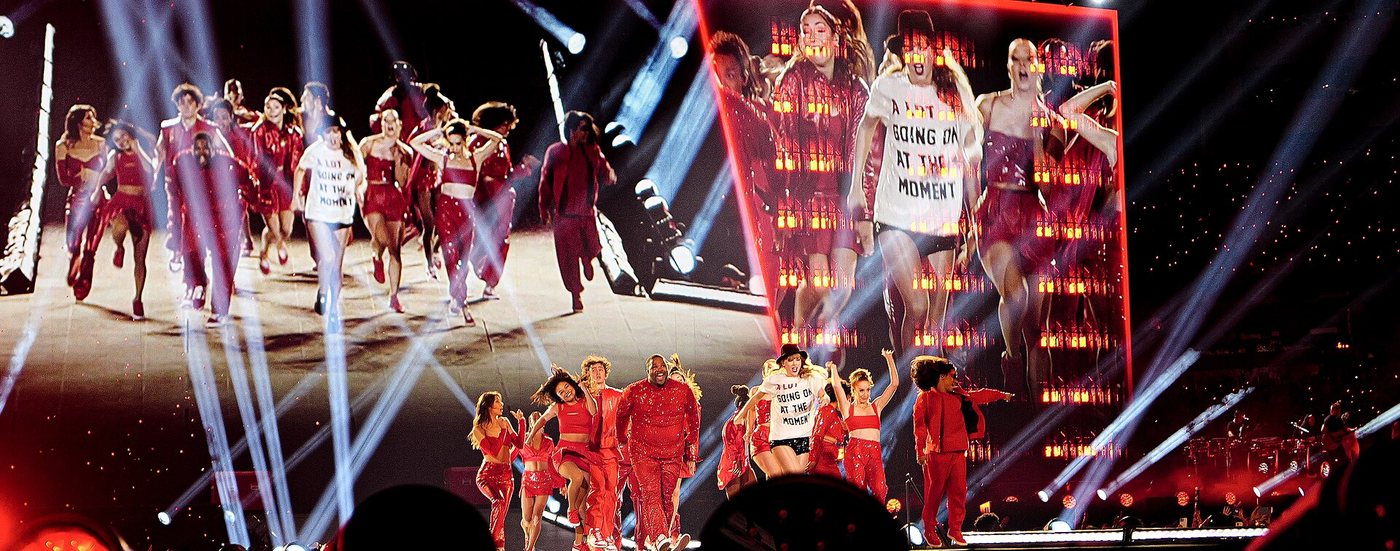
Taylor also leads by example, and some of this is linked to the above point but goes deeper. She’s tackled economic disadvantage through donating generously to food banks throughout the UK leg of The Eras Tour (via the Trussell Trust, in Edinburgh, Liverpool, Cardiff and London). One of the actions I really admired: when a radio DJ sued her for defamation after she reported him for sexually assaulting her, she countersued for a symbolic $1 — and won, saying she did it to empower other victims.
Finally, her music. I’ve already mentioned You Need to Calm Down. Another of her songs that has a DEI thread, calling out double standards in how we speak about women’s success as opposed to men’s is The Man. The content focuses on behaviours she’s experienced as a woman (and that many women, particularly in leadership positions, will recognise), where, if she were a man, she’d have been hailed as almost a hero. She also builds on this in Mad Woman, which challenges the negative response women face when they speak up and are angered by suppressive patriarchal attitudes. In Nothing New the theme of ageism surfaces in the discarding of women as they age. Whilst it’s aimed at the entertainment industry, we can easily see this in the corporate world as well, particularly in recent years as menopause is increasingly recognised as a time women can experience additional disadvantage.
We can take these lessons into our own workplaces: valuing people for being their true selves at work, and bringing a sense of belonging and safety into teams and the whole company. You don’t need a stadium tour budget, you just need to be willing to raise others up. What’s better, these are the low-cost actions that contribute to building and cementing employee engagement.
So, whilst I ’fess up to being a total Swiftie, my admiration of Taylor Swift as a truly Fearless inclusive leader goes beyond her music.
What role models do you have that embody inclusive leadership?